
A Dialogue on Climate Action and Girls’ Resilience: Protecting Girls’ Rights and Choices in a Changing Climate
A flood may destroy a family's home. A cyclone may take away its livelihood. A prolonged climate crisis may interrupt a child's education. But for countless adolescent girls in Bangladesh, the consequences of climate change can extend far beyond the immediate disaster, threatening their safety, independence, and fundamental right to shape their own futures.
Climate change is no longer simply an environmental concern. It is increasingly a question of human rights, gender equality, and social justice. As climate-related disasters intensify existing economic and social vulnerabilities, girls often face heightened risks of educational disruption, displacement, exploitation, and child marriage.
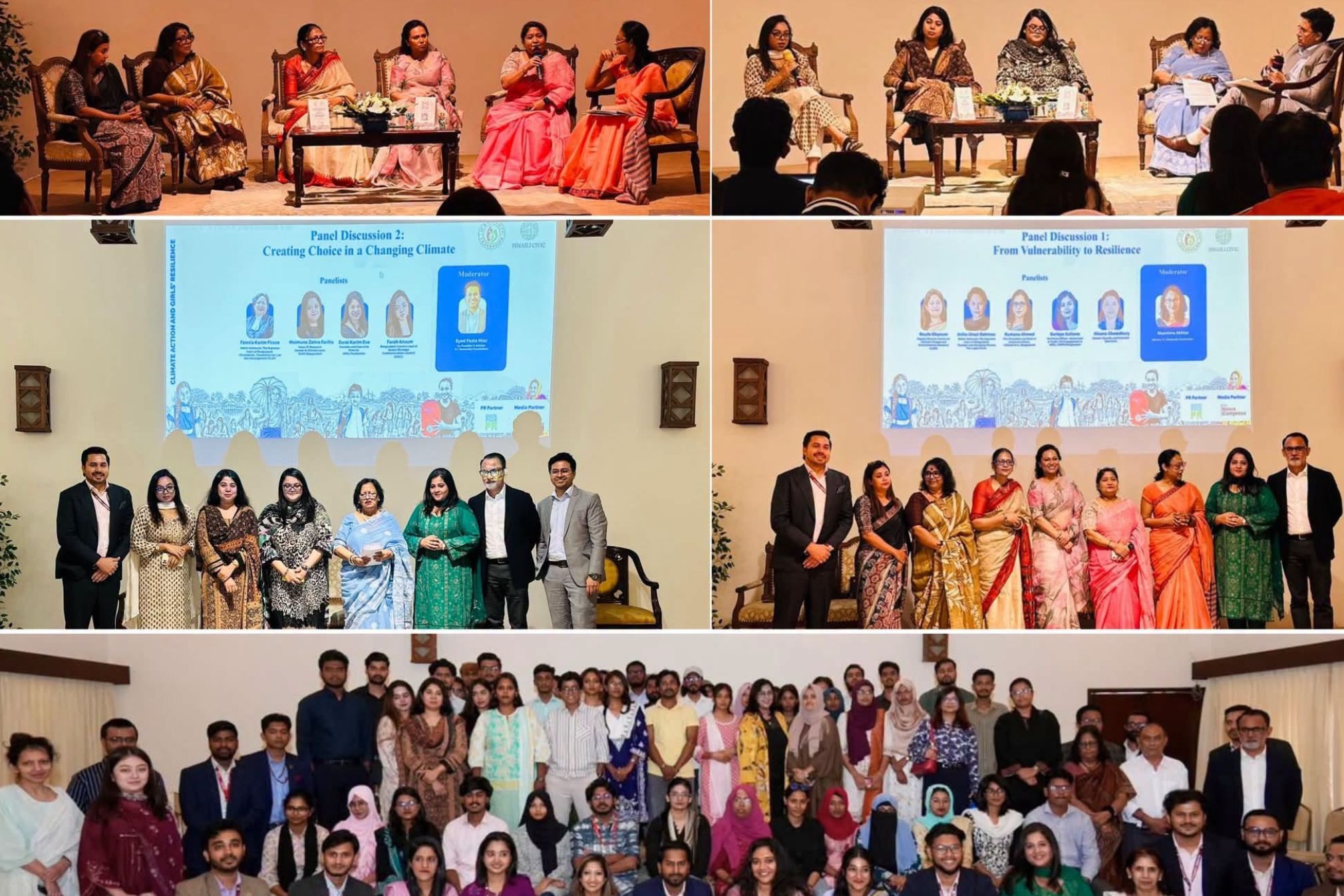
Recognising the urgency of these interconnected challenges, It’s Humanity Foundation (IHF) &a Ismaili CIVIC Bangladesh, hosted a dialogue titled “Climate Action and Girls’ Resilience” on 17 October 2026 at the Ismaili Jamatkhana and Centre, Dhaka.
Organised to mark the International Day of the Girl Child and National Girl Child Day, the event brought together prominent climate researchers, legal professionals, corporate leaders, gender specialists, development practitioners, and civil society representatives to explore how climate change, poverty, and gender inequality contribute to child marriage risks and undermine girls' opportunities.
Through a keynote address and two comprehensive panel discussions, the dialogue sought to move beyond recognising vulnerability towards identifying the partnerships, policies, and community-driven approaches necessary to build a more inclusive and resilient future.
At the heart of the initiative was a powerful message: A girl's future should never become a casualty of the climate crisis.
Climate Change and Child Marriage: Understanding the Hidden Connection
Bangladesh remains highly vulnerable to climate-related disasters, including floods, cyclones, river erosion, extreme temperatures, and environmental displacement. While these challenges affect entire communities, their social and economic consequences are not experienced equally.
For adolescent girls, climate shocks can create a series of interconnected vulnerabilities that threaten their long-term well-being.
When families lose their livelihoods, education often becomes more difficult to sustain. When communities are displaced, access to schools, healthcare, and protective services may be interrupted. When financial insecurity increases, existing gender inequalities and harmful social norms can deepen, leaving girls more vulnerable to early marriage and other forms of exploitation.
These risks are particularly concerning in communities where poverty, limited educational opportunities, and restrictive gender norms already undermine girls' independence.
Climate change does not directly or inevitably lead to child marriage. However, the economic insecurity, displacement, and disruption associated with climate emergencies can exacerbate the conditions in which harmful practices persist.
Addressing child marriage in climate-vulnerable communities therefore requires a broader understanding of resilience, one that combines environmental adaptation with education, social protection, economic empowerment, and the safeguarding of girls' rights.
The dialogue organised by IHF and Ismaili CIVIC Bangladesh created an important platform to examine these connections and consider how institutions, communities, and individuals can work collectively to address them.
Protecting Girls' Choices: A Powerful Keynote Address
The event featured a keynote address by Md. Adnan Hossain, Founder and Executive Director of It’s Humanity Foundation, who highlighted the relationship between climate vulnerability, gender inequality, and the growing threats to girls' futures.
Drawing on his extensive experience in social development, inclusive education, women's empowerment, and community resilience, he emphasised that the impact of climate disasters extends far beyond physical destruction.
For girls in vulnerable communities, the consequences of a disaster may continue long after floodwaters recede or damaged infrastructure is rebuilt.
The loss of household income, interruption of education, increased domestic responsibilities, and limited access to support systems can gradually restrict the choices available to adolescent girls.
His keynote reflected this reality through a powerful observation:
“A storm may disrupt a family’s life. A flood may wash away a classroom. But a crisis should never be allowed to wash away a girl’s choices.”
The message underscored the need to place girls' rights and well-being at the centre of climate resilience strategies.
Climate adaptation, he emphasised, must not be viewed solely through the lens of infrastructure, environmental protection, or disaster preparedness. It must also address the social structures that determine whether vulnerable individuals, particularly girls and young women, can continue accessing education, protection, and opportunities during times of crisis.
The keynote reinforced the importance of coordinated action to ensure that climate-related hardship does not become a barrier to girls' aspirations.
For It’s Humanity Foundation, which works to promote inclusive education, youth development, women's empowerment, and humanitarian support, this perspective reflects the broader responsibility of development organisations to address the interconnected challenges facing vulnerable communities.
Panel Discussion One: From Vulnerability to Resilience
The first panel discussion, “From Vulnerability to Resilience,” explored how climate change interacts with poverty, social inequality, and institutional barriers to create additional risks for girls and women.
The session was moderated by Shamima Akhter, Advisor at It’s Humanity Foundation, a corporate affairs and sustainability professional with extensive experience in stakeholder engagement and organisational leadership.
The panel featured five distinguished professionals representing climate research, law, corporate affairs, gender equality, and adolescent development:
- Roufa Khanum, Deputy Director, Centre for Climate Change and Environmental Research (C3ER).
- Anita Ghazi Rahman, Senior Advocate, Supreme Court of Bangladesh, and Founder and Managing Partner of The Legal Circle.
- Rumana Ahmed, Vice President and Head of Corporate Affairs, Citibank N.A., Bangladesh.
- Afsana Chowdhury, Gender Equality and Inclusion Specialist.
- Suriaya Sultana, Technical Officer – Adolescent & Youth, CSO Engagement & MERL, UNFPA Bangladesh.
Bringing together expertise from different sectors, the discussion examined the importance of strengthening resilience through research-informed policies, institutional accountability, gender-responsive development, and community-level support.
The panel provided a platform for considering how climate adaptation strategies can better address the realities faced by adolescent girls, particularly those living in communities affected by repeated environmental shocks.
A central theme was the need to recognise that vulnerability is not determined by geography alone. It is also shaped by unequal access to resources, education, social protection, and opportunities.
The discussion's multidisciplinary perspective highlighted the importance of integrating gender considerations into climate planning and development programmes.
Climate resilience requires more than enabling communities to withstand disasters. It also requires systems capable of protecting vulnerable individuals from the social and economic consequences that follow.
Legal safeguards, accessible services, corporate engagement, effective policies, and sustainable community initiatives all have a role to play in reducing the risks faced by girls.
By connecting environmental challenges with broader questions of rights and opportunity, the first panel strengthened the case for an inclusive approach to climate adaptation, one that prioritises both community resilience and individual well-being.
Panel Discussion Two: Creating Choice in a Changing Climate
Building on the first discussion, the second panel, “Creating Choice in a Changing Climate,” shifted attention towards practical pathways for strengthening girls' agency, promoting gender equality, and expanding opportunities in climate-vulnerable communities.
The session was moderated by Syed Fazle Niaz, Co-Founder of It’s Humanity Foundation, whose professional work focuses on responsible business practices, human rights, and sustainable development.
The panel brought together four accomplished leaders from the fields of legal advocacy, development research, grassroots empowerment, and climate communication:
- Advocate Fawzia Karim Firoze, Senior Advocate, Supreme Court of Bangladesh, and Chairperson of the Foundation for Law and Development (FLAD).
- Maimuna Zahra Fariha, Head of Research and Gender and Climate Lead, BURO Bangladesh.
- Esrat Karim Eve, Founder and Executive Director, AMAL Foundation.
- Farah Anzum, Bangladesh Country Lead, Global Strategic Communications Council (GSCC).
The session explored an essential question: How can society ensure that girls retain the freedom to make meaningful choices about their lives, even as climate change creates greater uncertainty?
The discussion's focus reflected the importance of moving beyond short-term responses and addressing the underlying conditions that limit girls' opportunities.
Protecting girls from child marriage requires a combination of legal protection, education, economic security, community engagement, and long-term empowerment.
It also requires recognising girls not simply as vulnerable beneficiaries of development interventions, but as individuals with aspirations, abilities, and the potential to contribute to their communities.
From strengthening local livelihoods and expanding access to education to promoting awareness and challenging discriminatory social norms, the panel's theme emphasised the need for solutions that address both immediate risks and structural inequalities.
Equally important is the role of effective communication and community engagement in translating research and policy recommendations into meaningful public understanding and action.
The session reinforced a broader principle: climate resilience should create opportunities rather than merely prevent losses.
A truly resilient community is one where girls can continue their education, develop their skills, participate in decision-making, and pursue their ambitions without being forced to compromise their futures because of environmental or economic hardship.
From Discussion to Action: Building a Gender-Responsive Climate Future
Together, the two panel discussions provided complementary perspectives on one of Bangladesh's most pressing development challenges.
While the first explored the systems and vulnerabilities that place girls at risk, the second focused on creating the conditions necessary for greater protection, participation, and opportunity.
Several priorities emerge from this integrated approach.
Strengthening climate-resilient education: Educational institutions and learning opportunities must be better equipped to withstand climate disruptions, ensuring that temporary emergencies do not lead to permanent school dropout.
Supporting economically vulnerable households: Sustainable livelihoods, women's economic empowerment, and accessible social protection programmes can help families navigate climate-related hardship without compromising their daughters' futures.
Integrating girls' protection into climate policies: Climate adaptation and disaster preparedness initiatives should incorporate gender-responsive planning and child protection considerations.
Promoting girls' leadership and participation: Adolescent girls must have access to opportunities that enable them to develop leadership skills, express their perspectives, and contribute to decisions affecting their communities.
Strengthening multisectoral collaboration: Government agencies, development organisations, researchers, legal professionals, businesses, and civil society must work together to develop coordinated and sustainable responses.
These priorities illustrate why climate action and gender equality must advance together.
Environmental resilience cannot be considered successful if communities recover physically while girls lose access to education, safety, and independence.
Recognising Girls as Agents of Change
The event concluded with closing remarks by Munira Ahmed Fidai, Lead for Ismaili CIVIC Bangladesh, bringing the dialogue to a close with a renewed emphasis on collective responsibility and the importance of protecting girls' opportunities.
The occasion highlighted the value of recognising adolescent girls not simply through the challenges they face, but also through their capacity to demonstrate leadership, influence decisions, and contribute to positive change.
Meaningful empowerment requires ensuring that girls' voices are heard, their aspirations are respected, and their rights remain protected regardless of their socioeconomic circumstances or exposure to environmental risks.
Creating resilient communities ultimately requires an approach that values girls as active participants in development rather than passive recipients of support.
Collaboration for Lasting Impact
The partnership between It’s Humanity Foundation and Ismaili CIVIC Bangladesh demonstrated the importance of bringing together institutions with complementary commitments to community development, humanitarian values, social inclusion, and environmental responsibility.
By creating a shared platform for dialogue, the organisations facilitated an exchange of perspectives across disciplines that are often addressed separately.
Climate change, child marriage, education, economic vulnerability, and gender inequality are deeply interconnected challenges. Addressing them effectively requires partnerships capable of bridging research, policy, legal advocacy, corporate responsibility, and grassroots experience.
The event was also supported by Backpage PR as PR Partner and The News Compress as Digital Media Partner, whose contributions helped amplify the initiative and strengthen its public engagement.
IHF and Ismaili CIVIC Bangladesh extend their sincere appreciation to the keynote speaker, moderators, panellists, participants, and supporting partners for their valuable contributions to this important conversation.
Their collective engagement demonstrated a shared commitment to advancing awareness, encouraging collaboration, and strengthening the dialogue around girls' rights and climate resilience in Bangladesh.
A Future Where Every Girl Has the Freedom to Choose
The dialogue on “Climate Action and Girls' Resilience” served as a reminder that climate justice and gender justice cannot be pursued in isolation.
The impact of climate change should not be measured only in damaged infrastructure, disrupted livelihoods, or displaced populations. It must also be understood through the opportunities lost, the inequalities intensified, and the futures placed at risk.
For adolescent girls living in climate-vulnerable communities, resilience must mean more than surviving a disaster.
It must mean the freedom to continue learning, the security to grow up without the threat of child marriage, the opportunity to develop skills and aspirations, and the confidence to make decisions about their own lives.
The discussions organised by IHF and Ismaili CIVIC Bangladesh reaffirmed the importance of sustained engagement among development stakeholders, institutions, and communities to address these challenges through inclusive and coordinated action.
As Bangladesh continues to navigate the consequences of a changing climate, the protection and empowerment of girls must remain central to its development priorities.
Because protecting a girl's future is not merely a response to climate change. It is an investment in a stronger, more equitable, and more resilient Bangladesh.
And as the climate continues to change, one commitment must remain unchanged:
Every girl deserves the right to choose her own future.