
Standing with Flood-Affected Communities: The First Phase of IHF’s Emergency Response in Chattogram and Bandarban
Providing Essential Medical Consultations, Medicines and First-Aid Support to Flood-Affected Communities
When floodwaters began rising across southeastern Bangladesh, thousands of families in Chattogram and Bandarban suddenly found themselves facing uncertainty. Homes were damaged or submerged, roads and communication routes became difficult to access, and many people were forced to move to temporary shelters with limited food, clean water, medicine and basic hygiene supplies.
In response to the growing humanitarian crisis, It’s Humanity Foundation – IHF activated its emergency response initiative and mobilised its staff members, volunteers, local partners and supporters to reach some of the most affected communities.
The first phase of IHF’s flood response focused on providing immediate, practical and dignified assistance to families in Chattogram and Bandarban. From cooked meals and emergency food packages to medical support and essential hygiene items, the response was designed around the urgent needs identified by field teams and local communities.
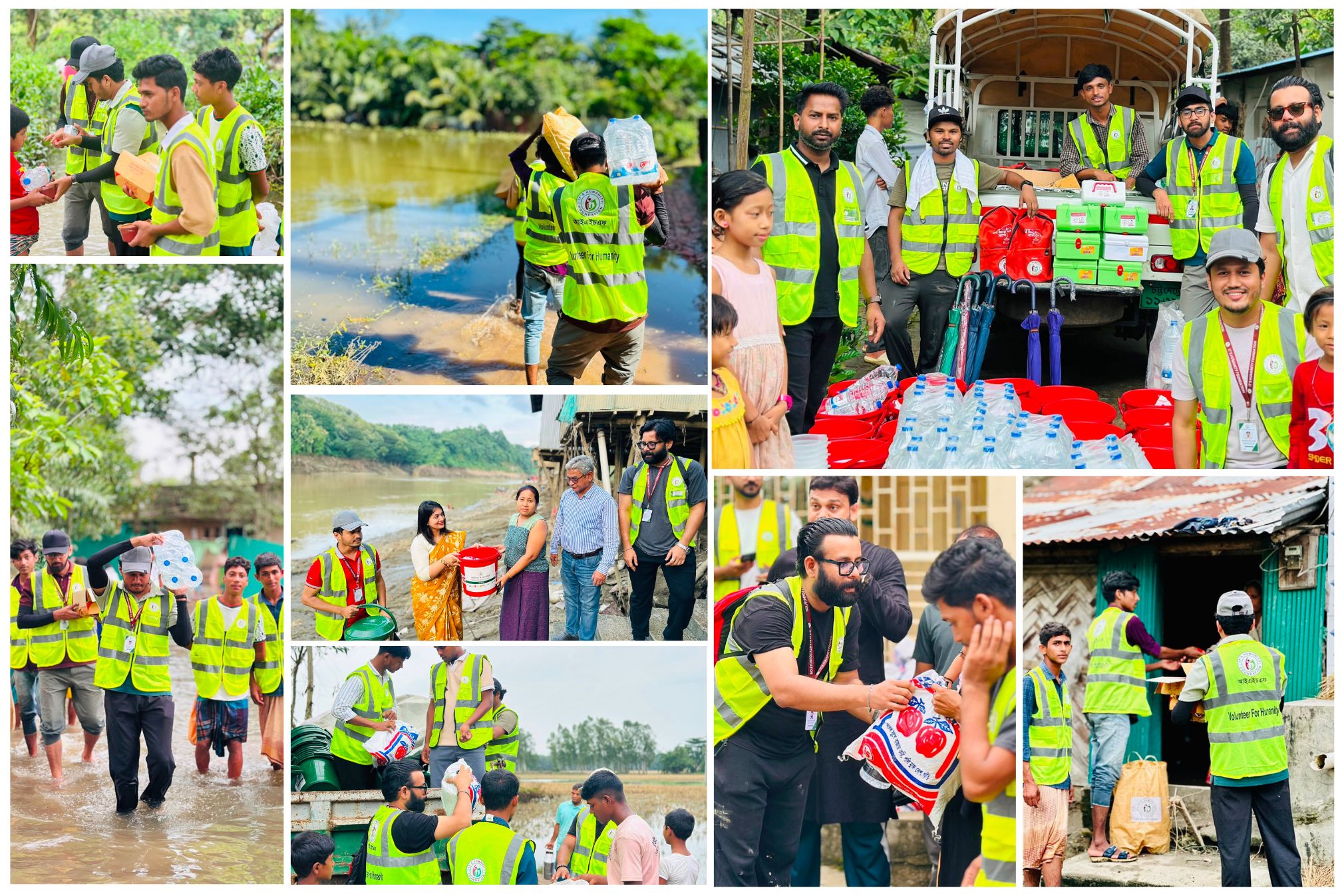
Responding from the Ground
Effective humanitarian response begins by listening to the people affected by the crisis.
IHF’s field teams travelled to flood-affected areas to assess the situation, coordinate with local volunteers and identify communities where support was urgently required. The teams worked through difficult weather conditions, damaged roads and limited access to reach families who had received little or no immediate assistance.
In Chattogram, the response concentrated on communities and shelter centres in severely affected locations, including parts of Bashkhali and surrounding areas. A local community centre was used as a temporary coordination and storage point, allowing the team to receive, organise and distribute relief materials more efficiently.
In Bandarban, IHF worked closely with local volunteers and community representatives to reach communities in Bandarban Sadar, including areas where indigenous and ethnic minority families had been affected by the floods.
The response was not limited to distributing supplies. It involved continuous communication with local residents, volunteer mobilisation, transportation planning, package preparation and beneficiary identification to ensure that assistance reached people based on need.
Emergency Food Support
Access to food becomes one of the most immediate concerns during a flood. Many affected families are unable to cook because their homes, kitchens and cooking materials are damaged or underwater. Others are forced to remain in temporary shelters without adequate cooking facilities.
To address this challenge, IHF provided hot cooked meals to flood-affected individuals and families staying in shelters and vulnerable communities. The cooked meal initiative helped provide immediate support to children, elderly people, women and families who had been without proper meals.
Alongside cooked food, IHF teams prepared and distributed emergency dry-food and grocery packages containing essential items that could be stored and used by families for several days.
These packages included items such as:
- Rice
- Lentils
- Salt
- Flattened rice
- Puffed rice
- Biscuits
- Chanachur and other dry snacks
- Oral saline
- Safe drinking water and water-purification support
- Basic hygiene products
A significant number of food packages were prepared for distribution across the affected regions. Each package was organised with the aim of supporting a family’s immediate nutritional needs while considering the practical difficulties of storing and preparing food during a flood.
Reaching Communities in Bandarban
During the first phase of the response, IHF distributed emergency assistance among 400 flood-affected families across six communities in Bandarban Sadar.
The distributions covered:
- Madhyam Para
- Barishal Para
- Ujani Para
- Limujhiri
- Casingghata
- Casing Para
Many of the families living in these areas experienced damage to their homes, loss of household supplies and disruptions to their regular livelihoods.
Reaching these communities required strong local coordination. Volunteers assisted the IHF team in identifying affected households, preparing distribution points, managing crowds and ensuring that elderly people, women and persons with disabilities could receive assistance safely.
Members and volunteers of the Bangladesh Marma Students Council – BMSC also supported the response in Bandarban. Their local knowledge and connection with the communities played an important role in helping IHF conduct the distributions in an organised and culturally respectful manner.
For IHF, the Bandarban response was particularly important because remote and indigenous communities can often remain outside the immediate reach of large-scale relief operations. The organisation therefore prioritised coordination with trusted local volunteers to ensure that support was distributed fairly and respectfully.
Health Campaign and First-Aid Assistance
Floods create serious public health risks. Contaminated water, injuries, skin infections, fever, diarrhoea and disruptions to regular healthcare services can quickly place affected communities at even greater risk.
As part of the first phase of its emergency response, IHF organised a health campaign in collaboration with Shurjer Hashi and provided first-aid support in selected flood-affected areas. Through the medical campaign, community members—particularly children, elderly people and individuals experiencing health complications—received basic medical consultations, essential medicines and necessary health guidance.
IHF also prepared family first-aid boxes containing essential medical and safety supplies. These kits were designed to help families manage minor injuries and basic health emergencies when access to nearby clinics, hospitals or pharmacies was limited.
The initiative reflected IHF’s belief that emergency assistance must go beyond addressing hunger. It must also protect the health, safety, dignity and overall well-being of people affected by disaster.
Hygiene and Protection Support
Maintaining hygiene during a flood is extremely difficult. Safe water becomes scarce, toilets may become unusable, and families staying in crowded shelters face increased risks of infection.
IHF therefore included hygiene and sanitation materials within its emergency response. Items such as soap, handwash, detergent, sanitary pads, antiseptic products, diapers and water-purification tablets were collected and prepared for distribution.
Special attention was given to the needs of women, girls, infants and elderly people. Menstrual hygiene products and baby-care items were included because these essential needs are often overlooked during emergencies.
The organisation’s approach was guided by the belief that humanitarian assistance should protect dignity as well as survival.
A Collective Effort
The first phase of IHF’s flood response was made possible through the combined efforts of corporate supporters, partner organisations, volunteers, community representatives and individual donors.
Organisations and supporters contributed food, biscuits, medicines, hygiene products, financial assistance, logistics and volunteer support. Contributions from Globe Pharmaceuticals Ltd., Globe Biscuits and Dairy Milk Ltd., Savlon Bangladesh, CGSD, BacharLorai Global, Aastha Trust and other well-wishers strengthened IHF’s ability to expand its emergency activities.
Local volunteers played an equally important role. They helped transport supplies, prepare packages, identify affected households, communicate with residents and distribute assistance in challenging conditions.
Every contribution, whether a packet of food, a box of medicine, a donation, a vehicle or a few hours of volunteer service—became part of a larger humanitarian effort.
Beyond Relief Distribution
Emergency response is not simply about handing over relief packages. It is about building trust, recognising people’s dignity and remaining present during moments of uncertainty.
Throughout the first phase, IHF teams engaged with affected families to understand not only what they had lost but also what they would need in the coming weeks.
Many families will continue to face challenges even after floodwaters recede. Damaged homes will require repair. Children will need to return to school. Families who lost crops, livestock or sources of income will need livelihood assistance. Communities will require clean water, healthcare and support to rebuild their lives.
For this reason, the first phase of relief distribution is only the beginning.
To extend your support to flood-affected communities and help families recover from this crisis, please visit:
https://www.itshumanity.org/ihf-emergency-response